Feeds:
Posts
Comments

During a recent smelling session for a product line I am involved in developing, I became hyper-aware about how critically important it is to “marry” the right scent to its matching product statement.

fragrance product development

While meeting with the Project Coordinator and Fragrance Sales Executive, we began to chat about the characteristics of the various scents we were smelling, which spanned a wide range of fragrance characteristics – from classic white florals, to bright juicy fruits, to fresh natural greens, and richly deep woody-spicy scents.  We were faced with the challenge of finding scents for various lines within a broad product category, but which individually had vastly different positioning statements, consumer targets and product benefits.

Much like a croupier at a casino dealing out cards, it surprised me how quickly I was able to sort the numerous scents into like-minded groupings which responded to the differing product criteria.  This could only be explained by my many years of experience in fragrance marketing and development, and the well-honed intuition which has resulted from my experiences in this field.

The correct fragrance-to-product pairing can spell success artistically, as well as commercially. A fragrance that doesn’t support or complement a product’s image, purpose, benefit or consumer target, won’t get that product very far.

I suddenly wondered whether the average consumer ever pauses to think about the amount of effort and thought that goes into selecting the scents in the products that they buy and enjoy?

Well…. do you???

It’s no coincidence that much of the vocabulary that is used to describe olfactive qualities stems from the musical world.

We describe fruity fragrances as having “notes” of apple, berries or melon; while a “medley” of bergamot, Meyer lemon and Valencia oranges that work in “unison” might be called a citrus “accord”.  Fragrances are described as scented “compositions” made up of ingredients that work in “harmony”.

During the creative and development process, “dissonant” notes or accords are refined until an ideal balance is achieved.   Perfumers aim to avoid creating fragrances that are either too “flat” or too “sharp”, striving instead for “interpretations” that are vibrant, that have “movement”, with a scent “signature”, and that make a long-lasting impression.

Only when all elements of a fragrance are deemed to be in perfect balance of “tempo” and “tone”, does it make its way into the market for everyone’s enjoyment!

Just returned from a weekend jaunt to “The Sweetest Place on Earth”, a/k/a Hershey Park.  But was my favorite part of the visit the sanity-defying rides?  The cardiac-arrest inducing roller-coasters?  The wallet-emptying shopping?  Or was it the brief tour of the mock chocolate factory in Hershey’s Chocolate World?  Bingo!

So, what was it about a 5-minute Disneyesque ride through a simulated chocolate factory that I found so appealing?  For starters, within seconds of entering the darkened ride, cacao’s appealing scent gently tickled my nose and I instantly found myself on the alert!  By minute two, I was immersed in full-blown chocolate-scented heaven.  By the end of the ride, I couldn’t wait to hit the shop and stock up on an assortment of every product that had been featured in the ride!

Afterwards, I couldn’t help but wonder if my nearly primitive reaction had been exacerbated by the scent of chocolate which further enhanced the stimulating visual experience of the “brown gold” pouring all around me.   Had the scent not been a prominent part of the ride, would my reaction have been the same?  I don’t think so.  As interesting as the chocolate manufacturing process is, it was the scent’s “promise” of what I would soon be tasting that prompted my guttural response.  Oh, and the singing cows were kind of cute too!

On a recent morning with my workout group, one of the ladies asked for a recommendation of a laundry detergent that would effectively remove “sweaty odor” from her workout clothes.  Naturally, I chimed in with my recommendation, as did several others with their personal favorites.

Not surprisingly, someone emphatically declared her preference for fragrance-free laundry detergent.  This immediately prompted a debate of sorts regarding the majority’s preference and desire for fresh and clean-smelling clothes, vs. clothes which we know are clean (because they’ve been through the laundering process), but that do not have the “trademark clean smell” that only a scented fabric care product can deliver.

“Ms. Anti-Scent” posed this question to the rest of us:  “Why should my clothes have a scent, when my deodorant, shampoo and body lotion already do? ”

Well, when you put it that way…   Clearly, there will always be indisputable fans of fragrance – such as myself – as well as critics of its overuse.  However, my workout buddy does bring up a good point regarding her concern about wearing too many incompatible scents on her self, which may prove counterproductive; i.e. clashing instead of smashing!

However, with a little fragrance know-how, a quick-fix (of sorts) can be found to that situation.  You see, many personal care and fabric care scents are increasingly inspired by the fine fragrances sold at the department store counters — what in the fragrance industry is known as “trickle-down scents”.

So, if you’re partial to fruity scents, then select a shampoo (Herbal Essences) and/or laundry detergent (Gain) in that scent arena.  If you’re more of an oriental (warm vanilla spicy woody) fragrance lover, then reach for the bottle of Organix shampoo’s Shea Butter variant, and soften your clothes with Downy Simple Pleasures in Lavender Vanilla scent (my personal favorite!).  In this way, all this fragrance “layering” will be complementary, and will add to your signature style!

Fragrance Insights will be “on hiatus” from June 25th through September 25th, in search of inspiration for new features and stories about fragrance.  Look for the action to begin again in the Fall!

See you then!

Things we are familiar with and that bring us comfort are our “go-to” staples when we are feeling stressed, uncertain or anxious.  It should be no surprise then that a recent EquiTrend poll measuring a variety of products’ brand equity conducted by Harris Interactive, revealed that some of the top ten brands (across a multitude of product categories)with the highest brand equity were familiar indulgences such as M&Ms, Reese’s cups and Hershey Kisses, in addition to the ever-reliable Honda, Sony and Kitchen Aid brands and premium Grey Goose vodka.

One would think that in the present economy consumers would automatically opt for the most inexpensive product, however the intrinsic value of “comfort” is directly tied into a product’s performance, reliability and the consumer’s familiarity with it.  Therefore selecting a cheaper alternative might pose a risk that the consumer might not be willing to take, and would rather pay a premium in exchange for guaranteed satisfaction.

In the fragrance world, we refer to Comfort Scents as those with food-based notes that are warm and sweet with nuances of vanilla, chocolate, nuts or spices.   Powdery notes have also long been associated with comfort because they take us back to our cuddle-filled childhood days, while fruity scents lend comfort with their familiarity, freshness and uncomplicated character. 

You will find that many of the newer fine fragrance introductions fall into those categories, or have comfort notes that are highlighted in their composition…And they’re exactly what we’ll need to help get us through this rough patch!


(To read more about the EquiTrend poll, go to MediaPost.com’s June 8th Marketing Daily brief: “Poor Economy Heightens Brand Equity”.)

Aside from traditional fragrance uses we are all familiar with…cologne for the body and scented personal care & household items, fragrance is finding new avenues for use which will not only help give the category a much-needed boost during the current sales slowdown, but which will also help integrate scent even deeper into our lives.

Food companies have been experimenting with incorporating scent to packaging in order to further enhance the gustatory experience of the food product.   Hospitals, and office buildings have also experimented with scents that promote relaxation, healing, focus or productivity.  

But more recently, restaurants and hospitality chains have also begun integrating scent as a means of ommunicating their “signature” brand message.  It is hoped that when a customer enters  establishment “XYZ”, the distinctive scent of that locale will become a permanent part of their favorable recollection of their experience at “XYZ”.

Much has been written about the intimate relationship and synergy that exists between scent and memory, and it is only natural that this relationship be explored beyond our personal use of fragrance, and broadened to include other experiential aspects of our lives.  Any thoughts?…

Seville Oranges

Seville Oranges

In a previous post I wrote a bit about the growing trend of marketing aimed at Hispanic consumers, and how the fragrance industry might capitalize on this trend. 

The food products industry has a wide lead in this area, with several years of introducing snacks, beverages and dairy products with flavors that are inspired by the Latino culture and taste palate.

Chips & Salsa

Chips & Salsa

In the late 90’s we saw how sales of salsa nearly caught up with those of ketchup.  Today, chipotle & jalapeno and dulce de leche & tres leches are just as part of our culinary vernacular as are salt & pepper and vanilla & cinnamon.  But more recently, we are seeing other regional ingredients combined with the better-known Mexican and Cuban ones, in a Pan-Latin flavor fusion where the common denominator is their cultural diversity, depth and contrasting textures. 

Black Bean Soup

Black Bean Soup

Some of the more popular emerging “new” flavors include:

– Seville orange –  Mediterranean variety with a more bitter, less nectar-y flavor that imparts a citrus character with greater  “zing & heat” for a “Caribbean tang”.   

– Sofrito – A pesto-like simmering sauce incorporating basil, cilantro, parsley, onion, garlic, tomato, red or green pepper and olive oil.  Varies according to regional tastes.  It forms the basis of cooking for Puertorrican, Cuban, Dominican and Spanish foods. 

– Aji Amarillo (Yellow chile) – This peruvian original imparts a fruitiness to its inherent chile heat for more complexity and depth of flavor.

Aji Amarillo

Aji Amarillo

– Epazote – a Mexican herb that in its raw state smells pungent, but when simmered in dishes, it imparts a rich mellow flavor that American chefs are finding “addictive”.

Epazote Herbs

Epazote Herbs

As these and other flavors become more popular and are adopted into the mainstream, expect to see them used in scented personal care and household products, as they inspire innovative fragrance combinations that remain true to the trend toward globalism, food-inspired scents and contrasting textures…

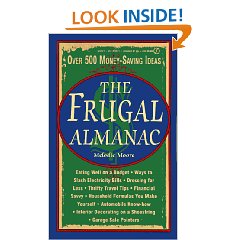
In the June 1st issue of Advertising Age, a column was devoted entirely to the question whether consumer spending would be permanently changed in the wake of the “deepest recession in half a century, and (whether) the tightening will remain when the downturn ends“.  

The frugal consumer's "bible"

The frugal consumer's "bible"

The consensus seems to point toward a general pattern of lesser spending and greater savings that will persist even after the worst of the recession is over.  However, the degree to which consumers will cling to this new modus vivendi depends on how directly they were impacted by the recent meltdown. 

Persons who were first-hand victims of job losses and/or home foreclosures and whose experience was deeply traumatic will be much more consistent about continuing to live a frugal lifestyle with a greater focus on saving.  Those for whom the economy has been merely “troubling and worrisome” will probably be more likely to resume their old spending habits once the economy becomes healthy again and lifestyle trends return to glamour and increased spending.

In yesterday’s Wall Street Journal, the surprising findings of  a poll conducted by JD Power (automotive forecasting) were reported.  Consumers were asked: “If you had $3500 to spend on features for a new car, which features would you choose?”  The market researchers were shocked to find a growing number of respondents declaring:  “I would keep the money!”  In short…Consumers weren’t even willing to part with imaginary money!!!  (Source:  WSJ 6/9/09  Eye on the Road).

In light of this discouraging news, expect for some of the changes now taking place in an effort to fuel current consumer spending may to become permanent fixtures of the marketplace.    Lower prices; smaller (more affordable) sizes; new positioning strategies such as organic, environmentally-friendly, fair trade or cause-related will all give consumers a ‘reason to buy’ that still communicates value…a central theme in the emerging consumer psyche!

Wake your taste buds with scent:  videoIt is a scientific fact that 90 percent of what we perceive as taste actually stems from our sense of smell.  Scent molecules processed through our nose trick our brains into thinking that we are tasting certain flavors.  Based on this scientific knowledge, the latest developments in the flavor industry include scent infusions applied to food packaging that will enhance product flavor while replacing costly and undesireable additives such as corn syrup or heavy cream.

Today, you can find sippy cups infused with a chocolate smell that will give your child the impression they are drinking flavored milk, water bottles filled with plain water but infused with scents that impart the perception of flavor, and low-sugar cereal boxes infused with a sweet smell to compensate for the reduced sugar content.

Whether consumers will “fall” for this trickery is yet to be seen, but what must be acknowledged is the innovative use of scent in an entirely new application.  Given the slowing growth of scented products in many categories, points must be given to innovators who are finding new uses for scent, beyond the cosmetics, toiletries and household arenas.  Regardless of the outcome, exploring new uses for scent keeps the industry moving forward, and stimulates creativity, innovation and ultimately the bottom line!